What is registration (empadronamiento) in Spain?
In Spain, everyone residing in the country is required to register at their place of residence. This registration, known as Padrón or empadronamiento, is necessary for the Spanish authorities to maintain population records and verify living conditions.
Why is registration important?
For newcomers (relocants), registration may be required for a number of essential matters:
- Obtaining a residence permit in Spain
- Applying for citizenship
- Getting a work permit
- Exchanging a driver’s license and obtaining vehicle registration plates
- Enrolling children in public schools and kindergartens
- Obtaining a medical card
- Applying for subsidies and other social benefits
Registration also serves as proof of your stay in the country if you plan to apply for residency on the basis of “arraigo” (rooting in the community). Tax rates in Spain may also vary depending on the province where you are registered.
It is recommended to register immediately after arriving in Spain. Registration is carried out at the local town hall (ayuntamiento) of your place of residence, and you must book an appointment in advance.
How to book an appointment
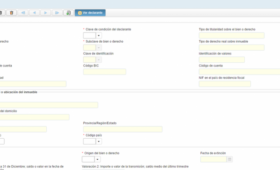
To book an appointment, click the link “Solicitud de una cita” on the municipality’s website. A form will appear to enter your personal details.
In the “topic” section, select OAC: Atención presencial en la oficina, and in the subsection, choose Padrón: Alta/Cambio de domicilio.
The system will offer available dates and locations. After selecting a convenient time, the screen will display the confirmation details.
Check your entered data carefully to avoid having to repeat the visit, then click “enviar” to confirm. A confirmation notice will be sent to your email.
Can registration be done remotely?
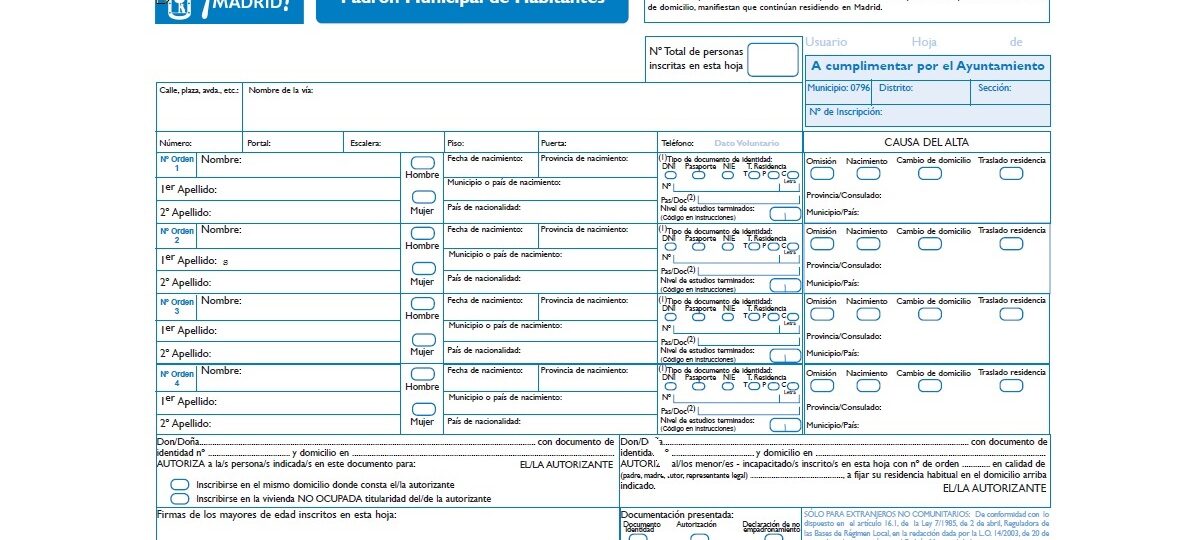
If you prefer to complete registration remotely, you must fill out the relevant form on the Solicitud website. In this case, the certificate of registration will be sent to your new address within 15–30 days.
Another person can also represent you—such as a friend—if they have proper authorization on a special municipal form. This authorization is valid for one month from signing.
The town hall may request additional documents if necessary. If the provided documents are sufficient, you will be issued the Volante de empadronamiento immediately.
Typical documents required:
- Consent form for registration
- Rental contract
- Passports of all persons being registered, with copies
- Latest utility bills (electricity, water, gas) if the rental agreement is over a year old
If the property belongs to a friend or acquaintance, proof of ownership (such as a Nota Simple property registry extract) is required instead of a rental contract.
Full list of documents for registration in Spain:
- Original and copy of your passport (and those of any family members being registered)
- If applicable: residence permit (TIE), NIE
- Proof of property ownership or rental contract (usually 3–12 months depending on region)
- Utility bills and proof of last payment
Once registered, you will receive a Certificado de empadronamiento valid for 90 days. The registration itself is valid for two years. Even those without legal residency status must register, as the time from registration counts toward eligibility for residency under arraigo. This certificate is also necessary for extending or obtaining residency.
Registration of children
Children can only be registered in the presence of one parent or legal guardian. Registration at a different address from the parents/guardians is possible if there is written consent.
A birth certificate is mandatory. If issued in a foreign language, it must be translated into Spanish and legalized via the consulate or a sworn translator.
If the child lives at a boarding school, the school director acts as the legal guardian for registration purposes.
Required documents for children:
- Original and copy of the child’s passport
- Birth certificate
- If parents are separated: consent from the other parent, with a copy of their passport
- Guardian’s declaration and ID (TIE or DNI)
- Guardian’s housing documents (property extract, recent utility bill)
Renewal of registration
Registration is not automatically renewed. Usually, 1–2 months before expiration, you will receive a notice to visit the town hall with required documents for renewal. Failure to do so will result in cancellation within a few months.
After five years of continuous registration with a temporary residence permit, you can apply for a larga duración (long-term) 5-year permit. Continuity of registration is essential. You may move between cities, but must maintain uninterrupted registration.
For larga duración, you will need a padron histórico, which confirms your residential history in Spain.
When moving to another municipality, you must register at your new town hall, which will notify the previous municipality within 10 days to remove you from their records.
Note: Municipalities in different provinces may not be interconnected, so to obtain a complete padron histórico, you might have to collect records from every municipality where you lived and combine them into one document.
Certificates of registration in Spain
There are two main documents:
- Volante de empadronamiento — proof that you are registered in a specific municipality. Used for administrative purposes such as library cards, social benefit applications, sports club registration, or transport passes. In some cities like Barcelona, you can get this quickly at red kiosks (Quioscos de Trámites y Servicios) in certain town halls.
- Certificado de empadronamiento — a more formal document, required for official/legal purposes, such as in court, for police registration of your residency card, work permits, health care registration, driver’s license applications, marriage registration, enrolling children in school, and applying for benefits. It is valid for 2 years, lists your full name(s), ID/passport number, nationality, gender, place/date of birth, and registered address. The certificate can be obtained at the town hall, usually for free or for a small fee. It is valid for 90 days and may list all registered occupants or only you.
Is registration required for the Digital Nomad Visa?
For the application stage, no. The Digital Nomad Visa process is fully online, and you can apply from any Spanish city without providing registration. However, after approval, you may need it when giving fingerprints for your TIE residency card at the police station—except in Barcelona, Madrid, and Reus, where it is not required at any stage.
Still, once you rent permanent housing, it is advisable to register, as it may be needed for:
- Enrolling children in school
- Opening a bank account (e.g., Correos Bank)
- Accessing government services or health insurance
- Future residency or citizenship applications
The process is simple and quick but requires a rental contract in Spanish.
Where to apply for registration online
Examples:
- Nerja: online form via municipal website, requires digital ID or certificate.
- Almuñécar: online form available, digital certificate required.
- Torrox: online form via municipal site.
- Mijas: application available on Mijas Online Portal.
- Fuengirola: must register in person at the town hall.
- Marbella: in person or online via Málaga Online Registration portal.